The first time you rent a trailer, there's a moment where you wonder if you're missing something — some hidden requirement, some paperwork, some piece of equipment you forgot to buy. Usually you're not. It's simpler than it looks. But there are a few things worth knowing before you show up so nothing slows you down on the day you need to get stuff done.
We've walked hundreds of first-time renters through the process. Here's everything we wish everyone already knew before they called.
Step 1: Figure Out What You Actually Need
There are three types of trailers most people rent, and choosing the right one upfront saves you from making a second trip:
- Utility trailer — open flatbed, great for landscaping material, ATVs, furniture, and smaller loads. Ours is 7×14 ft and rents for $40/day. If your stuff isn't fragile and doesn't need to be locked up, this is your cheapest option.
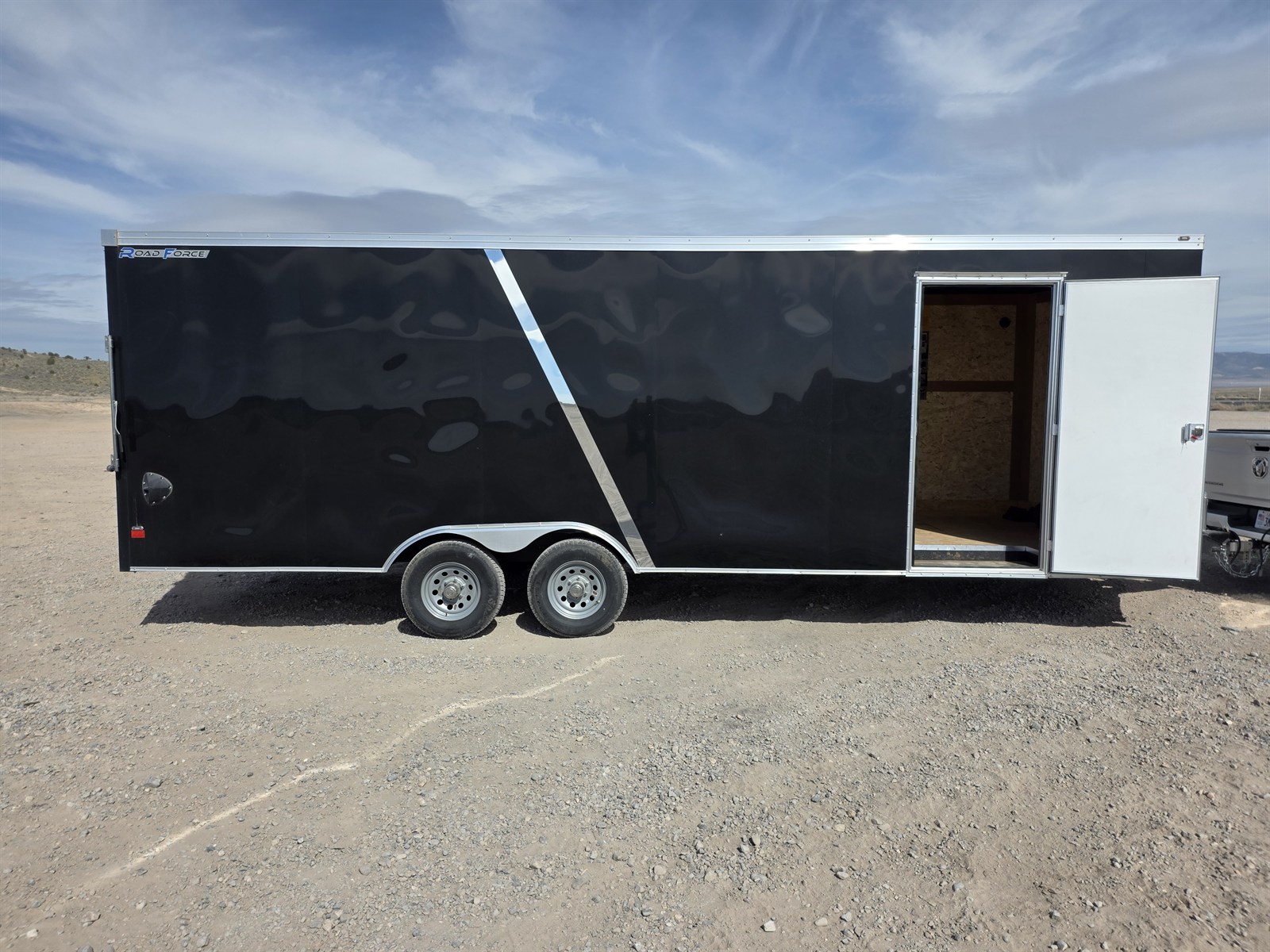
- Enclosed trailer — fully covered box trailer. Better for moves (weather protection, lockable doors), business equipment, anything you want secured. Ours is 24 ft and rents for $95/day. If you're moving an apartment or full house, this is what you want.
- Dump trailer — hydraulic bed, designed for hauling and dumping material at a landfill or job site. Perfect for yard waste, dirt, gravel, concrete, demo debris. Ours is 14 ft with a 9,800 lb capacity at $80/day. If you're doing any kind of cleanup project, this saves hours of shoveling.
Still not sure? The most common mistake is going too small. People underestimate how much stuff they have, especially for moves. When in doubt, go one size up.
Step 2: Check That Your Truck Can Tow It
This is the question we get most often, and the answer is almost always "yes" — but it's worth verifying before you book.
Your tow vehicle's maximum tow rating is listed on a sticker inside your driver's door jamb, or in your owner's manual. For our trailers:
Towing Requirements
Most half-ton pickups — F-150, Silverado 1500, Ram 1500, Tundra — handle all four trailers comfortably with a tow package. Midsize trucks like a Tacoma or Colorado can handle the utility and often the enclosed, but check the rating. Full-size SUVs (Tahoe, Expedition, Yukon) are usually fine. Cars and small SUVs typically aren't rated for anything bigger than a small utility trailer.
If you're unsure, look up your truck's tow rating online using the year, make, model, and engine. Takes two minutes and saves a lot of headache.
Step 3: Get the Right Hitch Equipment
You need two things on your truck: a hitch ball and an electrical connector. That's it.
Most trucks already have a receiver hitch (the square tube under the rear bumper). You just need a ball mount with the right size ball screwed in. A 2-inch ball works for the utility trailer. For our enclosed and dump trailers, you need a 2-5/16 inch ball — it's slightly larger and not interchangeable.
Ball mounts and balls are available at any auto parts store (AutoZone, O'Reilly) for $15–$40, or at Walmart. If you're picking up in the morning and don't have one, grab it the night before.
The electrical connector powers the trailer's brake lights, turn signals, and running lights. The utility trailer uses a flat 4-pin connector, while the enclosed and dump trailers use a round 7-pin connector. Almost all modern trucks have a round 7-pin connector behind the rear bumper, and a simple 4-pin adapter covers the utility trailer. If you're not sure what you have, bring your truck by and we can help you figure it out.
Step 4: Book Online, Pick Up When You're Ready
We don't do appointments. Book online at emtrailerrentals.hqrent.com, choose your dates, and pick up when the trailer's ready and you're ready. We're open 24/7 — including Saturday mornings, Sunday afternoons, and any holiday you can think of.
A lot of rental places keep business hours. That means if you want to start early on a Saturday, you're waiting until 9am. We're out here in Eagle Mountain and the trailer doesn't care what time it is. Pick it up at 5am if that's when your project starts.
What to Bring When You Pick Up
- Valid driver's license
- Your truck, already equipped with the right hitch ball and electrical connector
- That's basically it
We'll walk you through connecting the trailer, verify the lights work, show you the ramp operation (utility trailer), or explain the hydraulic dump control (dump trailer) before you drive off. First-timers always get the walkthrough — just ask if you want to go over anything.
Do I Need a Special License?
No. In Utah, a standard Class D driver's license covers towing any of our trailers with a personal vehicle. No commercial license, no endorsements, nothing extra. The only situation where that changes is if you're operating a commercial vehicle over 26,000 lbs combined gross weight — which doesn't apply here.
What Does a Day Rental Actually Mean?
A day rental means you have the trailer for a 24-hour period from pickup. Return it by the same time the next day and you pay for one day. Keep it a second day and you pay for two. Simple. We also offer weekly rates (utility $240, enclosed $570, dump trailer $480) that work out to a much better deal if your project runs multiple days.
A Few Things That Catch First-Timers Off Guard
- The trailer is heavier than it looks empty. Our dump trailer weighs about 5,000 lbs empty. You feel it when you brake. Leave more following distance than you think you need.
- Wide right turns. The trailer tracks inside your truck. Make right turns wider than you think necessary — aim for the far side of the lane.
- Backing up. Backing a trailer is counterintuitive at first. To back left, turn the wheel right. Take it slow and use small corrections. An empty parking lot is good practice before you need to back into a tight spot.
- Check your mirrors constantly. You want to know what the trailer is doing, especially on the highway. If it starts moving side to side, ease off the gas and don't hit the brakes hard.
None of this is scary — it's just new. Most people get comfortable after a few miles. If you have any questions before or during your rental, call us at (385) 269-0712. We're here.